Erdoğan’s recent public promise to consider reopening the legendary Halki Seminary has revived the historic concerns and aspirations of Istanbul’s Rum community and, in some cases, its support forTurkey’s longest-serving president
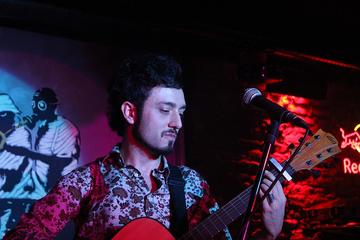
Mabel Matiz, one of Turkey's most famous pop singers, risks prison for his latest song, which has been labeled "obscenity" because it sings of homosexual love: a further crackdown on the LGBT community in the "Year of the Family" decreed by the AKP
On the occasion of the twenty-fifth anniversary of the death of Professor Edward Dennis “Ned” Goy (1926–2000), a look at the life and cultural activity of this great Slavic scholar and translator of important works by Serbian and Croatian authors
In the aftermath of World War II and the creation of socialist Yugoslavia, Brijuni became a kind of second Yugoslav capital. Tito used to spend a good part of the year on the islands, welcoming numerous international guests. And this is where the Non-Aligned Movement was born
The Brijuni Islands, a small national park in the northern Adriatic, have a very unique history. Once a malaria-ridden area with inhospitable terrain, they became an important tourist destination in the 19th century thanks to Austrian entrepreneur Paul Kupelwieser. In this two-part report, we explore their history and present-day reality.
Thessaloniki has long skirted the uncomfortable truths of the Greek Civil War, leaving much of its violence unrecorded and its victims unhonored. The recent discovery of mass graves near Genti Koulé challenges both the city’s institutions and its citizens to confront a history that was deliberately buried
In a quest for truth, renowned author Lea Ypi, with her new book Indignity, embarks on a journey that carries her from the multiethnic setting of the last days of the Ottoman Empire to the rise of fascism across Europe, and the subsequent establishment of proletarian dictatorships in the East
Previously marginal revanchist intellectuals have been producing grandiose ideological theorisations, that are now at the core of state-sanctioned narratives legitimising Russia’s invasion of Ukraine. There is however little evidence that the “hawks” can effectively constrain the Kremlin’s policy choices
Behind the charred landscapes of Greece’s fiery summers lie untold human stories: of loss, resilience, and deep psychological and social scars for individuals and communities alike. Each year’s wildfires in Greece expose systemic failures
Overcoming gender inequalities in the labour market in Armenia is a long-standing challenge. However, some promising changes have occurred in recent years, from a stronger participation of women in various sectors to efforts to overcome systemic barriers and change social perceptions
In Milan, cinemas have drastically decreased, going from 160 in the 1960s to the current 30. But despite the crisis, some independent theaters resist: like Cinema Arlecchino, reborn precisely when it seemed destined to disappear forever
Once vibrant hubs of community life, Tirana's cinemas have largely faded. Despite this, a burgeoning movement for revival is underway, with figures from the municipality and independent filmmakers working to re-establish cinema as a vital part of Tirana's cultural identity
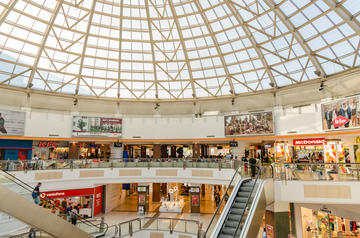
Romania has the lowest number of cinemas per capita in Europe. Of the more than 400 cinemas that existed after communism, most have been closed or converted. Modern multiplexes in shopping malls do not compensate for the loss of neighborhood cinemas, places of culture and identity
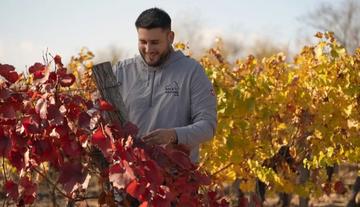
Down the bunches slide, gravity doing its work, onto a conveyor belt where they would be sorted by hand. The soft landing maintains the integrity of each grape, ensuring their insides aren’t exposed to the elements. It is a therapeutic process for the winemaker and the onlooker, a patient but necessary first step
A city that does not advertise itself, but is worth discovering: Craiova, the historic capital of Oltenia. Little-known even in Romania, it offers a rich cultural life, a unique atmosphere, and the jewel of Romanescu City Park
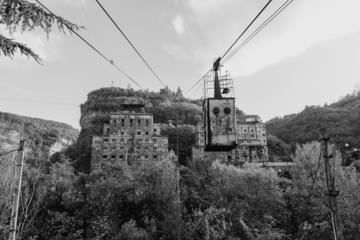
Chiatura was carved by the mines and built on manganese. A century of digging has left Chiatura scarred, sick, and silenced. Now, with operations halted and voices rising, the town demands more than justice: it demands a future
The debate on how the communist dictatorship should be remembered has been rekindled by the ongoing conservation and restoration work at the former prison and forced labour camp of Spaç. Although public policies and interventions for the memory of this difficult part of the past have long been called for in the country
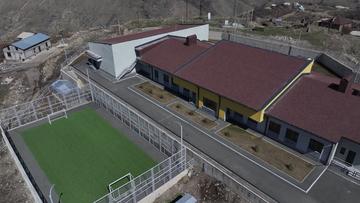
In recent years, the Armenian government has launched a program to stimulate housing construction in border areas, with the aim of repopulating marginal areas. The initiative, also open to refugees from Nagorno Karabakh, has had an unexpected success
Overcoming the controversial legacies of the past and finding a new role, between education on respect for nature and conservation of endangered species: the challenge for Bulgarian zoos in this interview
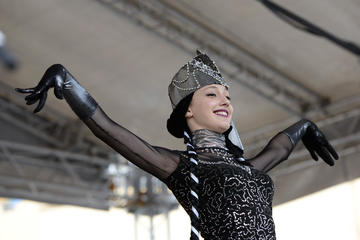
On Sunday, 18 May, an annual festival dedicated to the 18th century ethnic Armenian troubadour and poet, Sayat Nova, real name Harutyun Sayatyan, was again held in Tbilisi’s Maiden in the city’s historic Old Town.
The Italian organization NAMEX has facilitated the creation of key infrastructure in Albania for a neutral and more resilient internet, gaining ground in its international ambitions. However, significant disparities in digital skills and access to services persist across the territory
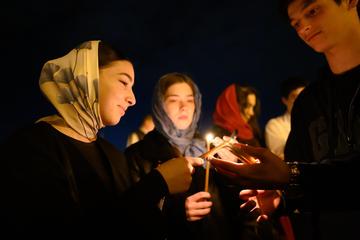
As midnight arrived in Tbilisi, Easter awoke in a glow of candles and prayer. This year, for a change, Georgian Orthodox and Armenian Apostolic Easter occurred on the same day, April 20, just as it did elsewhere in the world. Text and Photographs by Onnik James Krikorian
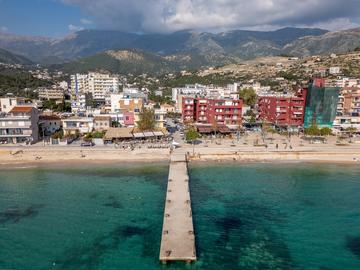
In southern Albania, the Greek minority coexists peacefully with the Albanian population, despite periodic tensions fuelled by the respective governments and nationalist forces. With the tourist boom, the real problem in the region is ruthless capitalism
The recent tragedy of the fire in the Kočani nightclub in North Macedonia has caused a wave of solidarity: among the first to respond was neighbouring Greece, sadly familiar with the dynamics of disasters caused by corruption and lack of political accountability
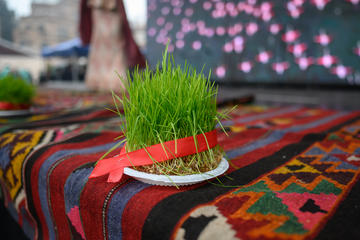
Last week, the ethnic Azerbaijani community of Georgia celebrated the annual Novruz festival, the coming of Spring. Photos and texts by Onnik James Krikorian
The traditional passage of shepherds and sheep tramples the ground but does not destroy biodiversity – rather, it creates spaces and opportunities to make animals, plants and even people more resilient. A researcher studied it in the lab and in the Romanian mountains where she grew up
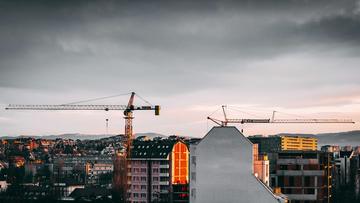
The cityscape of Bulgaria's capital has changed dramatically since 1989. But the building boom has paid scant regard to either regulations or the city's distinctive architectural heritage. And upcoming projects might well disfigure the city forever, as is shown on a 3D map created by Boyan Yurukov, an open-data activist
The last episode of our reportage along the Drina: from Višegrad towards Žepa and Mokra Gora, all the way to the Šargan Eight, a railway built in 1916 by the Habsburg administration. We talk about the past, language variations and environmental protests
We continue our journey along the Drina, the river that enchanted Ivo Andrić. In this third and penultimate episode we visit the places where the great writer spent his childhood, and Andrićgrad, the controversial tourist complex designed by Emir Kusturica
By combining investigative rigour with creative storytelling, local journalists in Thessaloniki have kept the public informed, but also ensured that the metro remains a shared civic concern, a story owned by the people as much as by the trains themselves