

EU territorial cooperation, environmental challenges and enlargement
The webinar focused on EU cohesion policy and its link with enlargement towards the Western Balkans, looking in particular at the contribution of communities of practices, intended as groups of professionals dealing with concrete issues in the field, such as in the case of environmental protection.
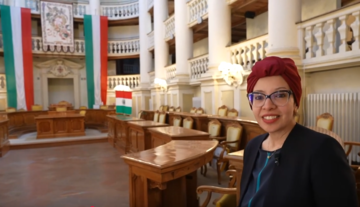
Marwa Mahmoud: growing up in Italy and engaging in politics as a citizen
Marwa Mahmoud, councilor for education policies of the Municipality of Reggio Emilia, offers us a lucid and touching look at the complexity of identity and belonging. Hers is the story of an Italian public figure with a migrant background: born in Alexandria, Egypt and raised in Reggio Emilia, she cherishes her roots, but at the same time she is determinedly committed to building the future of the country she has chosen as her home and place of political commitment, despite racism and the difficulties related to bureaucracy and obtaining citizenship.
Balkan migrants in Turkey: Naturalization, identifications, and associations
In the new episode of the podcast The Southeast passage, Elif Becan discusses the integration of Muslim migrants from the Balkans into the Turkish Republic during the interwar period
 Voices of Sarajevo for the Children of Gaza
There is a group of people in Sarajevo. Some have been friends for many years, while others met only recently, but today they are united by the same idea and the same sense of responsibility. Since February 2024, every Tuesday evening, they gather by the Eternal Flame, a symbol of antifascism and resistance in the very heart of Bosnia and Herzegovina’s capital, to read aloud the names of Gaza’s murdered children.
 Mines in Croatia, the final step
Croatia began clearing 1,174 square kilometers of land in 1996, and since 1998 has done so with the support of several donors, including the European Union. With the "Croatian Safe Steps CROSS II" project, co-financed by the EU under the Competitiveness and Cohesion Programme, it will be able to declare itself mine-free by 2026. Text by Nicole Corritore, photos by Silvia Maraone
 Croatia, wolf conservation center
At the end of 2024, the Standing Committee of the Bern Convention adopted a proposal from the European Union to downgrade the wolf’s conservation status from “strictly protected” to “protected”. The decision came into force in March 2025. According to the European Commission, there are too many wolves in Europe today, but experts claim that the decision is “scientifically unfounded”. Attacks on pastures, as Croatian biologist Josip Kusak explains, are often the result of bad habits, such as letting livestock roam unsupervised. “We have to learn to coexist with wolves again”, the biologist continues, because “the role of this large carnivore in the ecosystem is irreplaceable”. Photo and text G. Vale
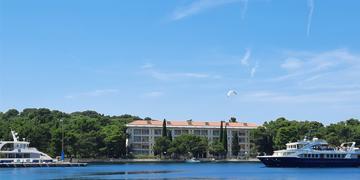 Brijuni Archipelago
From Habsburg hotels to exotic animals, the landscape of Veliki Brijuni tells the unusual story of the island. From a malarial swamp, Paul Kupelwieser transformed Brijuni into a luxury tourist resort at the turn of the 19th and 20th centuries. The archipelago was an elite destination until World War II, then became the summer residence of Josip Broz Tito during the socialist Yugoslavia. In this national park, one of the most beautiful in Croatia, today you can meet deer and zebras, ostriches and parrots, and even an elephant. Some visitors come to play golf, others relax on the islands without cars. Photos and text: Giovanni Vale
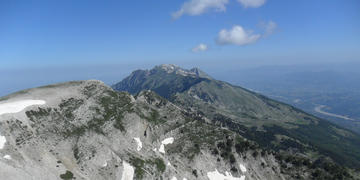 PROMONT: preserve the mountain ecosystem
Six countries of the Adriatic-Ionian space have joined forces to protect the mountain ecosystem and regenerate biodiversity. The "Promont" cooperation project seeks to empower the local communities to promote positive change through regenerative actions in these areas.
Photos of "Promont " project
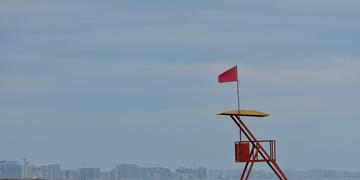 Romania, the tamed coast
Romania's 250 kilometers of Black Sea coastline are rapidly changing. Coastal erosion is rampant along much of the coastline: it is greatest in the north, where the effects of the scarcity of sediment retained by dams and rising sea levels compound natural processes. However, it is a major economic issue on the beaches of central and southern Romania, frequented by millions of tourists each year and home to industrial ports like Constanta. A colossal coastal defense project, funded by European Cohesion funds, is drastically transforming the coastal landscape, making it increasingly artificial.
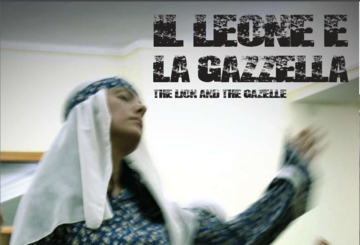
Nor Sunnies nor Shiites, heterodox Muslims of nomadic origins and mystical traditions: Turkish Alevis are estimated at around 10-15 millions against a total population of 70 millions. Enthusiastic supporters of Atatürk laicism, they were always seen with suspicion by the central authorities and the majority of the population. "The Lion and the Gazelle", a documentary film by OBC
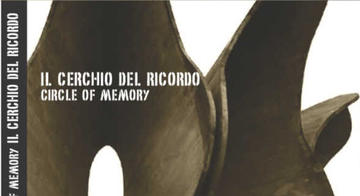
The unique experience of a group of architects and sculptors in 1960s and 1970s Yugoslavia, introducing new ways to remember World War II and the victory upon Nazism and Fascism. The curse of history at the beginning of the 90s, with the nationalist forces using those same memories to manipulate the different national communities and lead the country into war. A journey into European memory of the 20th century, the century that started and ended in Sarajevo
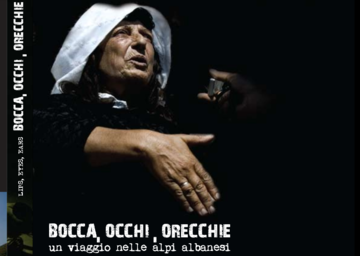
Michael is on the tracks of the Indo-European language, Gianni is an Arbëresh and teaches Albanian at the University of Calabria, Monica was the first researcher in Italy to obtain a PhD in Albanology. A group of linguists travelling into the majestic beauty of Albanian mountains in a quest for lost words and languages. “Lips, eyes, ears” traces a portrait of an unusual job, introducing a special perspective on today's Albania, its culture, and its landscape
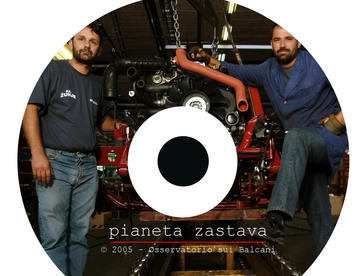
It was called Crvena Zastava, Red Flag, and it was the biggest car producer in the Balkans. Following the fall of Yugoslavia, it entered a devastating crisis, reaching its peak during the Nato bombings of 1999. While the factory lost its workers, the city of Kragujevac became one of the main destination for Kosovo refugees. A story on the violent transition from socialism to the market economy. Zastava Planet has been produced thanks to funding from the Autonomous Province of Trento

Artan Puto, born in 1969, is a university professor; however, people in the streets still recognize him as the star ofTomka and his friends, one of the most popular children’s movies of Albanian cinema. An unusual point of view on today’s Albania and on the changes which took place in this country. A documentary film by Micol Cossali and Davide Sighele, now available in streaming
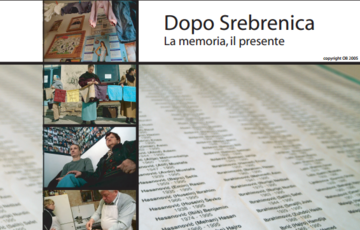
Ten years after the massacre of July 1995, this is the story of the town that has become a symbol of ethnic cleansing and racist violence in Europe. The documentary brings the viewer from Tuzla - where women fight for the investigation of their loved ones' disappearance, through Potočari - former headquarter of international peace forces, and all the way to Srebrenica. Going back and forth between present times, history, and memory, parallel narratives unfold, surrounded by a sense of alienation, in the heart of a town where the conflict does not yet seem to have found an end. “After Srebrenica” was filmed thanks to the support of the Autonomous Province of Trento.
