“We will keep speaking, protesting and demanding justice, until Palestine is free”, announces a group of Sarajevo residents who have been gathering weekly since Febuary 2024 to read aloud the names of children killed in Gaza
There is a group of people in Sarajevo. Some have been friends for many years, while others met only recently, but today they are united by the same idea and the same sense of responsibility. Since February 2024, every Tuesday evening, they gather by the Eternal Flame, a symbol of antifascism and resistance in the very heart of Bosnia and Herzegovina’s capital, to read aloud the names of Gaza’s murdered children.
A decade after the so-called “refugee crisis” of 2015, South-Eastern Europe remains the focal point and most fragile terrain of European migration policy. What appeared to be a temporary emergency has become a permanent political laboratory in which civil society, deterrence strategies and geopolitical realities are intertwined
OBCT joins today's strike, to support the humanitarian and nonviolent mission of the Global Sumud Flotilla and denounce the genocide we are witnessing in Gaza
Boris is leaving for Gaza with other activists on the Sumud Flotilla. His motivation is his witnessing the siege of Sarajevo as a young man and his great frustration today, as a humanitarian professional and an Italian-Bosnian citizen, at not being able to deliver aid to Gaza. A reflection on humanitarian law and being an activist
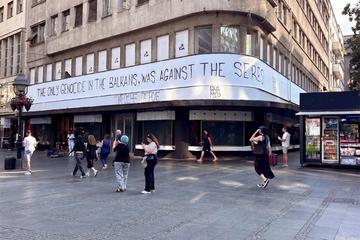
Thirty years after the Srebrenica genocide, we are witnessing another genocide unfold live-streamed. What we once fought for, and the institutions born out of that earlier tragedy, have failed to prevent the obliteration of Gaza. A reflection by Luisa Chiodi, Director of OBCT, and a heartfelt appeal not to surrender to resignation
Trump's recent meeting with the leaders of Azerbaijan and Armenia, Aliyev and Pashinyan, in Washington raises hopes for a peace agreement. However, there's a paradox: while leaders shake hands abroad, those who practice reconciliation are being criminalized at home
Overcoming gender inequalities in the labour market in Armenia is a long-standing challenge. However, some promising changes have occurred in recent years, from a stronger participation of women in various sectors to efforts to overcome systemic barriers and change social perceptions
Justice, the role of the EU, life under Russian occupation, and the centrality of people in Ukraine's reconstruction plans: we spoke with Oleksandra Matviichuk, human rights lawyer and director of the Center for Civil Liberties, an organization awarded the 2022 Nobel Peace Prize
The general mood in Serbia is far from commemorative. For the Serbian authorities, summarizes the author, all sides committed crimes during the war, so all sides are guilty, and no one is guilty. A position close to that of former president Slobodan Milosevic after the war
Lesbian, gay, bisexual and transgender people have been celebrating Pride across Europe, but the landscape is divided between national bans and institutional pinkwashing. A look at how the European Union’s work on protecting LGBT+ rights is perceived by civil society
Zla Mavka is a grassroots network of Ukrainian women operating under occupation. Named after mythical Ukrainian forest spirits known for their wild and mysterious nature, the Mavkas represent a nonviolent resistance movement
Ukrainian refugees in Italy face mounting challenges as early solidarity fades. Language hurdles, job insecurity, and rising social tensions reveal the gap between initial support and long-term integration
The forced deportation of Ukrainian children remains a critical obstacle to peace talks, as Russia resists returning them. Despite progress in prisoner exchanges, Kyiv insists that no lasting agreement is possible without the children’s safe return
Living a life as a refugee, far from home, but constantly thinking about their country. There are those who think of returning, those who have already returned and have had to adapt to a country at war, those who perhaps will never return and will remain divided between two worlds
Over the past decade, Italy has been Azerbaijan’s main export destination. While Rome continues to benefit from Azerbaijani oil, Ilham Aliyev’s regime sentences a young scholar and aspiring film director to 18 years in prison
Women journalists in the Balkans face daily threats, sexist insults, verbal and physical attacks, most of which go unpunished. Some of them live under constant police protection. Despite it all, they continue doing their work
The Italian organization NAMEX has facilitated the creation of key infrastructure in Albania for a neutral and more resilient internet, gaining ground in its international ambitions. However, significant disparities in digital skills and access to services persist across the territory
In southern Albania, the Greek minority coexists peacefully with the Albanian population, despite periodic tensions fuelled by the respective governments and nationalist forces. With the tourist boom, the real problem in the region is ruthless capitalism
As in Agatha Christie's novel, in Azerbaijan opposition politicians, human and labor rights activists, journalists, scholars and academics continue to be victims of repression, one after another, with the substantial indifference of the international community
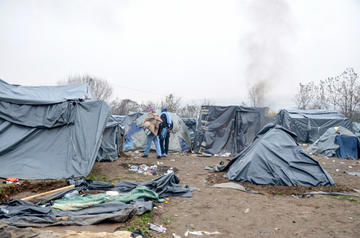
The European Court of Human Rights has ruled against Greece over illegal migrant deportations, condemning such practices as "systematic". This pivotal decision could influence how Europe manages migration at its borders
The way it is represented in formal education tells a lot about the condition of a people. Even when it is present in textbooks in South Eastern Europe, the history of the Roma is often ignored or represented in a way that perpetuates stereotypes and misconceptions
Initially in favour of Israel, Yugoslavia's stance shifted towards supporting the Palestinian liberation struggle. Post-Yugoslav states have largely abandoned the Non-Aligned Movement principles, taking divergent positions on the Palestinian question
Armenia’s absence from this year’s Climate Conference in Azerbaijan underscores the ongoing tensions between Yerevan and Baku. Swedish environmental activist Greta Thunberg surprised many by visiting Tbilisi and Yerevan to support protesters
The United Nations Climate Conference COP29 begins today in Baku, Azerbaijan. The following is a message to the international public: take a moment to remember Azerbaijan's political prisoners and the many human rights violations
The story of Eric, a forty-year-old Armenian who tried to migrate to the United States, starting from Armenia and crossing Europe, China and Mexico. His arrival as an irregular migrant in the USA coincided with prison. Released from prison thanks to a lawyer, he is now trying to rebuild his life
In an unexpected move, the Turkish political establishment has once again sent signals of openness to the Kurdish armed struggle. But what are the deep reasons behind this strategy? We asked sociologist Mesut Yeğen
One in six Romanians is not connected to the water or sewage network. In Bulgaria and the Baltic states the figures are also worrying – but the situation is finally improving, also thanks to European funds
The story of Suren, 42, who moved from Nagorno-Karabakh to Armenia a year ago, after the military attack by Azerbaijan. The difficult life of a man who has already seen four wars, the everyday challenge to take care of his family