An Armenian family whose destiny is intertwined with photography and Turkey's complex history. An interview with Armen Marsoobian, professor of philosophy and editor of Metaphilosophy magazine, a descendant of the Dildilian family, and himself a passionate photographer and collector
Thessaloniki has long skirted the uncomfortable truths of the Greek Civil War, leaving much of its violence unrecorded and its victims unhonored. The recent discovery of mass graves near Genti Koulé challenges both the city’s institutions and its citizens to confront a history that was deliberately buried
Thirty years after the Srebrenica genocide, we are witnessing another genocide unfold live-streamed. What we once fought for, and the institutions born out of that earlier tragedy, have failed to prevent the obliteration of Gaza. A reflection by Luisa Chiodi, Director of OBCT, and a heartfelt appeal not to surrender to resignation
This year marks the thirtieth anniversary of the Srebrenica genocide. Among the many events commemorating this tragedy, the conference "Why Remember? Testimonies of Light" took place in Sarajevo from 7 to 9 July. A few reflections on some of the key themes emerged during the conference
The debate on how the communist dictatorship should be remembered has been rekindled by the ongoing conservation and restoration work at the former prison and forced labour camp of Spaç. Although public policies and interventions for the memory of this difficult part of the past have long been called for in the country
Initially in favour of Israel, Yugoslavia's stance shifted towards supporting the Palestinian liberation struggle. Post-Yugoslav states have largely abandoned the Non-Aligned Movement principles, taking divergent positions on the Palestinian question
Nikola was just a few months old when, in August 1995, his family – together with the other 200,000 people of Serbian nationality, left Croatia in a hurry. After living in Serbia for fifteen years, he returned to Croatia where he attended high school and where he still lives and works. We met him
The warm season will be an opportunity to test the new infrastructures and strategies of an EU-funded project in the municipalities of Gorizia, Nova Gorica, and Šempeter-Vrtojba, a border area that conceives itself as a single, homogeneous territory along the river Soča
About 500 streets in Kyiv have been renamed since 2014 – many of them changed their name after the military aggression by Russia in 2022. Ukrainian and Western history and figures have now taken the place of Soviet or Russian ones
Thousands of Bosnian soldiers served in the Austro-Hungarian ranks during the First World War. Now a project uncovers and recounts their traces in Trentino
In 30 of Europe's biggest cities, streets named after women make up only 9 per cent of the streets dedicated to individuals. The imbalance has started to narrow in some places, but progress is too slow: at this rate, it would take centuries to really close the gap.
Almost thirty years after the genocide we are very far from starting a dialogue and a public discussion – in Bosnia and Herzegovina and in Europe – on the memory of what happened in Srebrenica. An interview with Andrea Rizza Goldstein
Three decades after the outbreak of the war, Bosnia and Herzegovina's society is still far from being able to overcome divisions and warmongering rhetoric
A building designed to celebrate a community that was an important component of the city fabric. And that is why it was set on fire in 1920 by those who wanted to paint Trieste as an exclusively Italian city. Now the Narodni dom has been returned to the Slovenian community
Thirty years ago, the siege of the city of Vukovar – one of the symbols of the war in the former Yugoslavia – ended. Boris Dezulovic, leading Croatian journalist, in a recent editorial that we translated, tries to highlight the profound contradictions of today's Vukovar. This, however, earnt him death threats. We interviewed him
"Jovanka Broz – in colour" is the title of the exhibition that was inaugurated last week at the Belgrade headquarters of the Serbian Radio Television and which will be open until November 30th
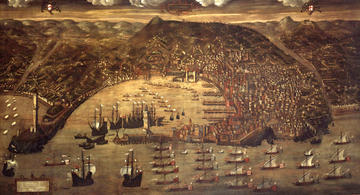
Italian maritime republics such as Venice and Genoa were very active in the Black Sea between the 13th and 15th century. Their presence in Abkhazia and their involvement in the slave trade from the Western Caucasus are the main subjects of a recently published book
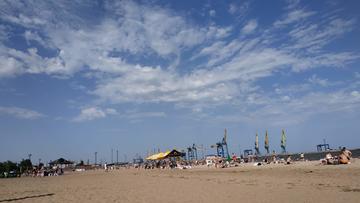
A few kilometres from the centre, "Ada Ciganlija" is now Belgrade's favourite escape from the chaos of the city, a green oasis where you can play sports, relax, and swim in the summer; however, few know of its turbulent past
Despite the proximity to the Donbass conflict, there is an air of normalcy in Mariupol, Ukraine. But that very air is heavily polluted by the historic Metinvest metallurgical complex
The ghosts of two famous personalities of the Twentieth century haunt Rijeka: the Italian poet Gabriele D'Annunzio who occupied the city with his legionaries and the Yugoslav leader Josip Broz Tito. The video introduces the guided tour "Ghosts of Rijeka", available on the App Rijeka-Fiume in flux!
Rijeka tells an emblematic history of movement and migrations in border regions. The video introduces the guided tour "People on the move", available on the App Rijeka-Fiume in flux!
Thirty years ago Slovenia proclaimed its independence. Now the pendulum that carried Ljubljana towards the West seems to be swinging backwards fast, and the models are no longer Paris or Berlin but rather Budapest and Warsaw, with their illiberal democracies
The National Library of Belgrade, the oldest cultural institution in Serbia, was destroyed on April 6, 1941 by the Axis forces on Hitler’s explicit orders. Thus Serbia lost an inestimable cultural heritage in a single day
The Kiev Institute of Cybernetics was one of the hubs in the USSR for the study and experimentation of computers. For many years mathematician Viktor Gluškov worked there, dreaming of a "paperless" Soviet administration, but his vision clashed with Leonid Brezhnev
A trip to Toledo, Spain, on the trail of the Sephardic Jews who were expelled from the Iberian Peninsula in the 15th century and arrived in Bosnia and Herzegovina. A chance for a reflection on memory, the Holocaust, the tragedies of history
After the Second World War, thousands left Italy to move to socialist Yugoslavia. Over the years, a lot has been written on this story, now revisited by two new studies on the basis of unpublished documentation
Are the histories of the former Yugoslavia and Albania finally entering Europe’s space of memory? A constantly increasing number of Italian school trips to the region gives us reason to hope so
Although it was a specifically European phenomenon, colonialism continues to be remembered almost only at national level. A resolution by the European Parliament could now help bring it into the European space of memory
Albania played a leading role in the history of the Serenissima Republic. Suffice it to say that the Albanian School was the first school of "foresti" (foreigners) opened in Venice, way back in 1448. Professor Lucia Nadin talks about these relationships
Combining scientific research, dissemination, and participation; telling the story of Rijeka in multiple languages. These are the objectives of an international project of which OBCT is a partner, in view of Rijeka – European Capital of Culture 2020