“We will keep speaking, protesting and demanding justice, until Palestine is free”, announces a group of Sarajevo residents who have been gathering weekly since Febuary 2024 to read aloud the names of children killed in Gaza
OBCT joins today's strike, to support the humanitarian and nonviolent mission of the Global Sumud Flotilla and denounce the genocide we are witnessing in Gaza
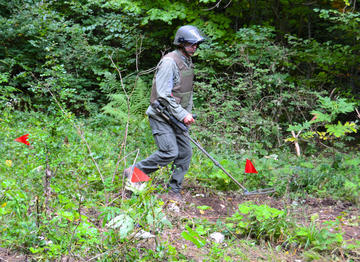
With the final phase, thanks to the European CROSS II project, Croatia will be completely mine-free by the end of the year. We visited the Otočac woods in Lika-Senj County, one of the front lines of the 1990s war where demining is still underway. Our report
Croatia began clearing 1,174 square kilometers of land in 1996, and since 1998 has done so with the support of several donors, including the European Union. With the "Croatian Safe Steps CROSS II" project, co-financed by the EU under the Competitiveness and Cohesion Programme, it will be able to declare itself mine-free by 2026. Text by Nicole Corritore, photos by Silvia Maraone
Croatia will be mine-free by the end of the year, thirty years after the end of the war. What will happen to the deminers who will not be able to retire after years of strenuous and dangerous work? We spoke to Mario Iveković, president of Novi Sindikat, a union that has been working to protect deminers since 2008
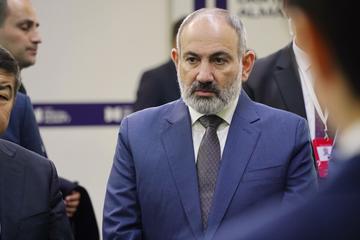
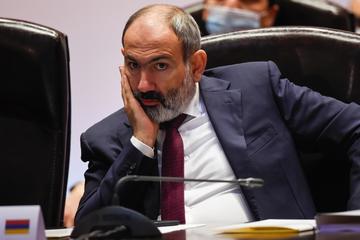
After meetings between Armenia, Azerbaijan, and Türkiye, optimism is growing for a peace treaty by 2026. Yerevan hopes to reopen its border with Ankara. Pashinyan is aiming for concrete results to strengthen his fragile political position
In addition to the destruction and deaths on the front lines, Russia's war in Ukraine creates invisible victims, many of whom are women. Women's solidarity networks are trying to help victims of kidnapping, exploitation and human trafficking
Previously marginal revanchist intellectuals have been producing grandiose ideological theorisations, that are now at the core of state-sanctioned narratives legitimising Russia’s invasion of Ukraine. There is however little evidence that the “hawks” can effectively constrain the Kremlin’s policy choices
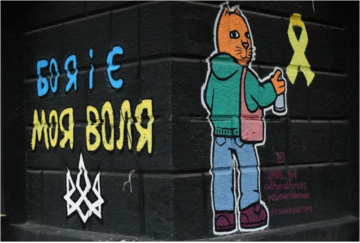
While President Putin’s conditions for achieving peace with Ukraine stay unshakable amid further peace talks, civilians in occupied territories are fighting against Russification. Although rarely talked about in Western media, Ukrainians are engaging in various forms of resistance, both peaceful and violent.
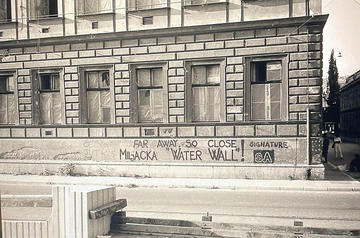
Thirty years ago, paper boats on the Miljacka carried messages from Sarajevo: "Hello Europe" and "WARum?"— questions that still echo through the world today. As Sarajevo extends its hand through symbolic gestures to Gaza and the Global Sumud Flotilla, past and present merge into the same river of resistance and hope
Last fall, Moldovan investigative journalists Natalia Zaharescu and Măriuța Nistor infiltrated the network of pro-Russian oligarch Ilan Șor for three months. They documented the illegal techniques used to mobilize people and the risks faced by journalists working in this context
Boris is leaving for Gaza with other activists on the Sumud Flotilla. His motivation is his witnessing the siege of Sarajevo as a young man and his great frustration today, as a humanitarian professional and an Italian-Bosnian citizen, at not being able to deliver aid to Gaza. A reflection on humanitarian law and being an activist
Thirty years after the Srebrenica genocide, we are witnessing another genocide unfold live-streamed. What we once fought for, and the institutions born out of that earlier tragedy, have failed to prevent the obliteration of Gaza. A reflection by Luisa Chiodi, Director of OBCT, and a heartfelt appeal not to surrender to resignation
Baku and Yerevan appear to have made significant progress toward reaching a peace treaty after a meeting, described as "constructive," held in the United Arab Emirates in early July. However, many question marks remain unanswered
This year marks the thirtieth anniversary of the Srebrenica genocide. Among the many events commemorating this tragedy, the conference "Why Remember? Testimonies of Light" took place in Sarajevo from 7 to 9 July. A few reflections on some of the key themes emerged during the conference
On the 30th anniversary of the massacre of over 8,000 Muslims by Bosnian Serb troops in Srebrenica, Bosnia and Herzegovina, the city and authorities from around the world remember the victims at the Potočari memorial. The commemoration began in the old battery factory that, from 1994 to 1995, served as the base for Dutchbat, the Dutch UN peacekeeping battalion that was supposed to protect the Muslim enclave during the Bosnian War.
Zla Mavka is a grassroots network of Ukrainian women operating under occupation. Named after mythical Ukrainian forest spirits known for their wild and mysterious nature, the Mavkas represent a nonviolent resistance movement
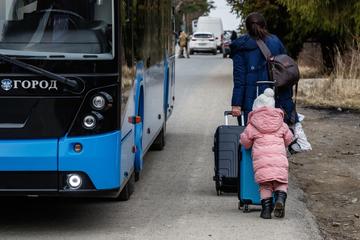
Ukrainian refugees in Italy face mounting challenges as early solidarity fades. Language hurdles, job insecurity, and rising social tensions reveal the gap between initial support and long-term integration
The forced deportation of Ukrainian children remains a critical obstacle to peace talks, as Russia resists returning them. Despite progress in prisoner exchanges, Kyiv insists that no lasting agreement is possible without the children’s safe return
Living a life as a refugee, far from home, but constantly thinking about their country. There are those who think of returning, those who have already returned and have had to adapt to a country at war, those who perhaps will never return and will remain divided between two worlds
Russian Foreign Minister Sergey Lavrov visited Armenia last week, signalling a potential thaw in ties after years of some strain. Prime Minister Pashinyan now appears to be pursuing a pragmatic foreign policy, balancing relations with both Russia and the West ahead of the 2026 elections
Ukraine is home to around 2.7 million people with disabilities, but the real figure in the war-torn country is certainly higher today. The conflict has made it harder to meet their needs, especially in rural areas
As Armenia-Azerbaijan negotiations appeared to have stalled over points of disagreement, Prime Minister Nikol Pashinyan has implied that the matter of a controversial preamble to the country’s constitution could be resolved
Azerbaijani President Ilham Aliyev has publicly called for an end to the "Gaza tragedy." Despite protests from many quarters, however, Azerbaijan remains the main supplier of oil to Israel, which has provided key assistance to Baku in modernizing its army
More than a year ago, the Israeli invasion of Gaza began. In the countries of the former Yugoslavia, governments and civil society have reacted differently. If governments – with the exception of Slovenia – have all but sided with Israel, civil society organisations have organised protests and demonstrations in favour of Palestine
A complex geopolitical web has entangled Georgia in another wave of protests. Following controversial elections held in October, thousands have taken to the streets in response to what many see as the government turning away from the European Union and moving closer to Russia
Armenia’s absence from this year’s Climate Conference in Azerbaijan underscores the ongoing tensions between Yerevan and Baku. Swedish environmental activist Greta Thunberg surprised many by visiting Tbilisi and Yerevan to support protesters
With less than a month left before the United Nations Climate Change Conference in Baku, the clock is ticking down on any potential document to be signed by Armenia and Azerbaijan to end over three decades of conflict
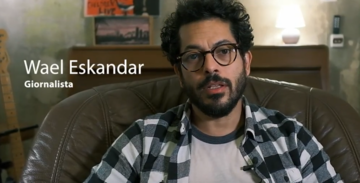
In Berlin, home to the largest Palestinian community in Europe, the solidarity movement with Palestine attracts only a fraction of the progressive forces. Bad press, the political class’s staunch defense of Israel and the heavy-handedness of the police discourage participation. Yet, the movement is committed to contributing to the democratic stability of the country. Interview with Egyptian journalist Wael Eskandar, currently living in Berlin.