

With the final phase, thanks to the European CROSS II project, Croatia will be completely mine-free by the end of the year. We visited the Otočac woods in Lika-Senj County, one of the front lines of the 1990s war where demining is still underway. Our report
Croatia, working with mines
Croatia, who is afraid of the wolf?
Europe, how to protect the wolf
Brijuni, the second capital of Yugoslavia
Brijuni, then and now
Fisheries management in the Adriatic: a virtuous example of cross-border cooperation
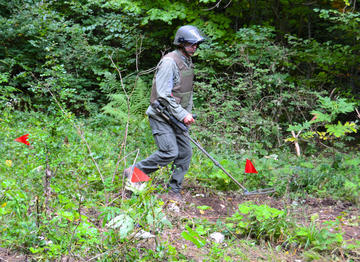
Mines in Croatia, the final step
Croatia began clearing 1,174 square kilometers of land in 1996, and since 1998 has done so with the support of several donors, including the European Union. With the "Croatian Safe Steps CROSS II" project, co-financed by the EU under the Competitiveness and Cohesion Programme, it will be able to declare itself mine-free by 2026. Text by Nicole Corritore, photos by Silvia Maraone

Croatia, wolf conservation center
At the end of 2024, the Standing Committee of the Bern Convention adopted a proposal from the European Union to downgrade the wolf’s conservation status from “strictly protected” to “protected”. The decision came into force in March 2025. According to the European Commission, there are too many wolves in Europe today, but experts claim that the decision is “scientifically unfounded”. Attacks on pastures, as Croatian biologist Josip Kusak explains, are often the result of bad habits, such as letting livestock roam unsupervised. “We have to learn to coexist with wolves again”, the biologist continues, because “the role of this large carnivore in the ecosystem is irreplaceable”. Photo and text G. Vale


