

Cohesion policy is the main instrument used by the European Union in order to promote social and economic growth, foster convergence between the different regions, and improve the quality of life on the ground. Since 2021 we have been reporting on the challenges faced by the regions of South-Eastern Europe and on initiatives which were promoted thanks to cohesion funds, first with the Work4Future projects and then with Energy4Future. The ‘Cohesion for Climate’ project continues to look at cohesion policy and related challenges, focusing in particular on interventions in the field of environment: prevention of natural disasters, land management, conservation of protected areas and species, and so on.
OBC Transeuropa collaborates in the Cohesion for Climate project together with Il Sole 24 Ore, ISSiRFA/CNR, Monithon and PressOne.


REPORT After thirty years, Croatia is free of mines
Nicole Corritore | 30/9/2025With the final phase, thanks to the European CROSS II project, Croatia will be completely mine-free by the end of the year. We visited the Otočac woods in Lika-Senj County, one of the front lines of the 1990s war where demining is still underway. Our report
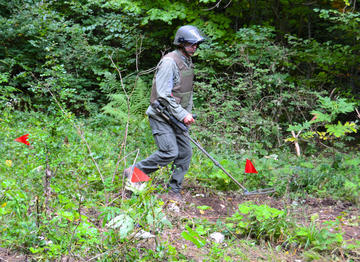
Mines in Croatia, the final step
30/9/2025Croatia began clearing 1,174 square kilometers of land in 1996, and since 1998 has done so with the support of several donors, including the European Union. With the "Croatian Safe Steps CROSS II" project, co-financed by the EU under the Competitiveness and Cohesion Programme, it will be able to declare itself mine-free by 2026. Text by Nicole Corritore, photos by Silvia Maraone

INTERVIEW Croatia, working with mines
Nicole Corritore | 30/9/2025Croatia will be mine-free by the end of the year, thirty years after the end of the war. What will happen to the deminers who will not be able to retire after years of strenuous and dangerous work? We spoke to Mario Iveković, president of Novi Sindikat, a union that has been working to protect deminers since 2008

EU territorial cooperation, environmental challenges and enlargement
The webinar focused on EU cohesion policy and its link with enlargement towards the Western Balkans, looking in particular at the contribution of communities of practices, intended as groups of professionals dealing with concrete issues in the field, such as in the case of environmental protection.

Croatia, wolf conservation center
1/1/1970At the end of 2024, the Standing Committee of the Bern Convention adopted a proposal from the European Union to downgrade the wolf’s conservation status from “strictly protected” to “protected”. The decision came into force in March 2025. According to the European Commission, there are too many wolves in Europe today, but experts claim that the decision is “scientifically unfounded”. Attacks on pastures, as Croatian biologist Josip Kusak explains, are often the result of bad habits, such as letting livestock roam unsupervised. “We have to learn to coexist with wolves again”, the biologist continues, because “the role of this large carnivore in the ecosystem is irreplaceable”. Photo and text G. Vale

REPORTAGE Croatia, who is afraid of the wolf?
Giovanni Vale | 29/9/2025Until recently, it was under strict protection, but since 2024, partly at the request of the European Commission, the wolf’s protection status has been downgraded, so today this species is potentially huntable. According to some experts, “when society shifts to the right, the wolf pays the price”

INTERVIEW Europe, how to protect the wolf
Giovanni Vale | 29/9/2025In this double interview between Serbia and Croatia, we talk to two experts about the state of the wolf population, until recently a strictly protected species in the EU, now degraded and potentially huntable. However, in Serbia, where wolves have always been hunted, the situation does not seem to be getting worse
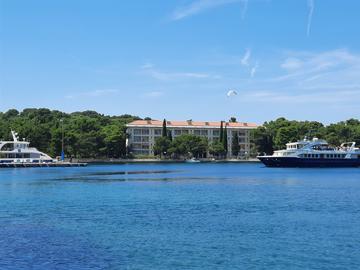
Brijuni Archipelago
29/9/2025From Habsburg hotels to exotic animals, the landscape of Veliki Brijuni tells the unusual story of the island. From a malarial swamp, Paul Kupelwieser transformed Brijuni into a luxury tourist resort at the turn of the 19th and 20th centuries. The archipelago was an elite destination until World War II, then became the summer residence of Josip Broz Tito during the socialist Yugoslavia. In this national park, one of the most beautiful in Croatia, today you can meet deer and zebras, ostriches and parrots, and even an elephant. Some visitors come to play golf, others relax on the islands without cars. Photos and text: Giovanni Vale

REPORTAGE Brijuni, the second capital of Yugoslavia
Giovanni Vale | 29/9/2025In the aftermath of World War II and the creation of socialist Yugoslavia, Brijuni became a kind of second Yugoslav capital. Tito used to spend a good part of the year on the islands, welcoming numerous international guests. And this is where the Non-Aligned Movement was born

ENERGY Interreg projects and the energy transition
Ornaldo Gjergji | 30/9/2025By materially supporting European regions on different sides of the border to solve a common problem, Interreg projects demonstrate how the impact of transition is often fostered by cross-border cooperation

REPORTAGE Brijuni, then and now
Giovanni Vale | 26/9/2025The Brijuni Islands, a small national park in the northern Adriatic, have a very unique history. Once a malaria-ridden area with inhospitable terrain, they became an important tourist destination in the 19th century thanks to Austrian entrepreneur Paul Kupelwieser. In this two-part report, we explore their history and present-day reality.
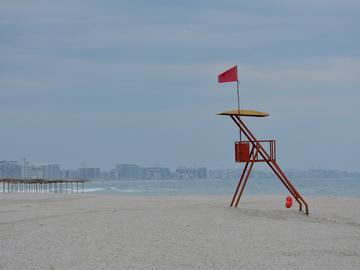
Romania, the tamed coast
10/9/2025Romania's 250 kilometers of Black Sea coastline are rapidly changing. Coastal erosion is rampant along much of the coastline: it is greatest in the north, where the effects of the scarcity of sediment retained by dams and rising sea levels compound natural processes. However, it is a major economic issue on the beaches of central and southern Romania, frequented by millions of tourists each year and home to industrial ports like Constanta. A colossal coastal defense project, funded by European Cohesion funds, is drastically transforming the coastal landscape, making it increasingly artificial.
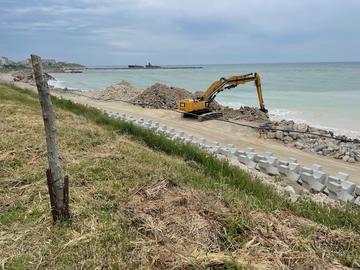
ENVIRONMENT Romania and coastal erosion: sustainability can wait
Marco Ranocchiari | 10/9/2025To defend the coastline threatened by the advancing Black Sea, the governments in Bucharest and Brussels had promised solutions based on an approach that focused on protecting natural environments. In the end, unfortunately, the "concrete cure" prevailed

INTERVIEW Mountains at the heart of the Adriatic-Ionian macroregion
Gentiola Madhi | 5/9/2025Threatened by mass tourism, unsustainable environmental practices and climate change, mountains are subject of transnational cooperation between six countries in the frame of the PROMONT project. An interview
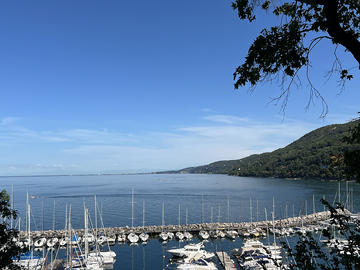
ENVIROMENT Adriatic Sea, a neglected cradle of biodiversity
Marta Abbà | 3/9/2025The Adriatic and Ionian Seas protect only 3.4% of their waters, compared to a European average of 10.8%. Experts call for coordinated action by the ten countries of the basin to combat overfishing and mass tourism
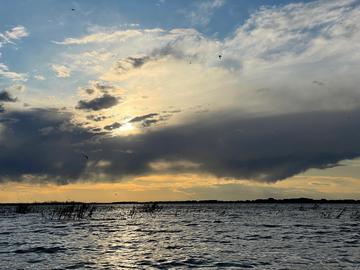
ENVIRONMENT The Danube delta: between environmental challenges, growing tourism, and communities on the brink
Marco Ranocchiari | 1/9/2025The mouth of Europe's great river is constantly changing and experiencing multiple environmental crises and social fragilities. European funds and new projects seek to combine environmental protection and local development
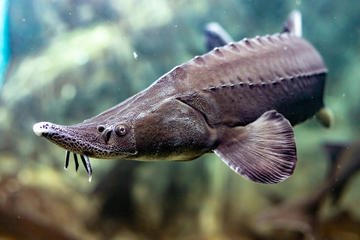
ROMANIA Danube delta: saving the sturgeon
Marco Ranocchiari | 29/8/2025Ambitious European projects support the protection of the sturgeon. However, without the support of the local community and compensation for fishermen, the goal of saving the the Danube's iconic fish remains elusive
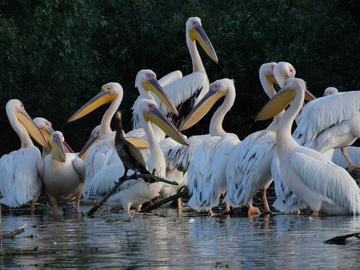
Danube, the transforming delta
29/8/2025With its labyrinth of canals, inland lakes, lagoons, remote islands, and windswept coastlines, the Danube Delta seems unchanging. Its precious habitats - a haven for Europe's main migratory bird species and the most iconic of fish, the sturgeon - and its lands where populations of diverse ethnicities, languages, and religions have found refuge, are exposed to accelerated environmental and social changes. Climate change and the disruption of upstream waterways are leading to erosion and silting of canals, while poaching, pollution, and a warming climate are threatening biodiversity.
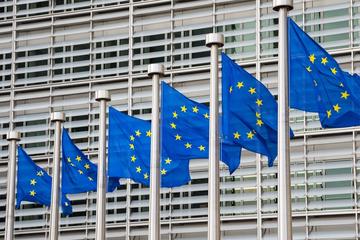
COHESION Cohesion policy: the controversial revolution of the future EU budget
Brussels | Federico Baccini | 28/8/2025Cohesion funds have also been incorporated into the new national and regional partnership plans envisaged in the proposal for the 2028-2034 Multiannual Financial Framework, which ties the disbursement of funding to the implementation of specific reforms. But the Commission is already being accused of centralizing management and marginalizing the regions

INTERVIEW Southern Adriatic: innovate, connect, and grow sustainably
Serena Epis | 25/8/2025In the Southern Adriatic, cross-border cooperation provides essential value added for protecting biodiversity. Shared and coordinated conservation actions between multiple countries are a strategic response to environmental challenges that transcend political boundaries
This material is published in the context of the ‘Cohesion4Climate’ project, co-funded by the European Union. The EU is in no way responsible for the information or views expressed within the framework of the project; responsibility for the content lies solely with OBCT.
