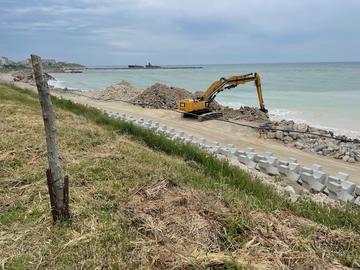
To defend the coastline threatened by the advancing Black Sea, the governments in Bucharest and Brussels had promised solutions based on an approach that focused on protecting natural environments. In the end, unfortunately, the "concrete cure" prevailed
In June 2017, an unprecedented fire struck Pedrógão Grande, Portugal, killing 66 people. This event marked a watershed moment in the awareness of the need to rethink land management in Europe
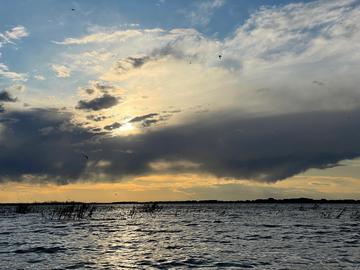
The mouth of Europe's great river is constantly changing and experiencing multiple environmental crises and social fragilities. European funds and new projects seek to combine environmental protection and local development
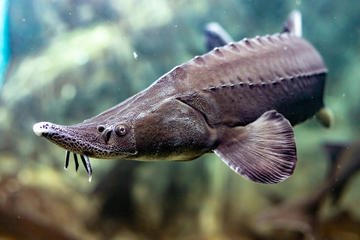
Ambitious European projects support the protection of the sturgeon. However, without the support of the local community and compensation for fishermen, the goal of saving the the Danube's iconic fish remains elusive
From the wild shores of the Danube delta to the gentle, urbanized beaches of the south, the Black Sea coastline is retreating under the pressure of climate change and man-made structures that trap sediment. New interventions aimed at protecting it risk repeating the mistakes of the past
Deforestation, urbanization, and the climate crisis are fragmenting the habitats of large carnivores in Romania and Southeastern Europe. A network of European initiatives is working to protect them, promoting peaceful coexistence as well as biodiversity
In the face of the threat of extreme fires, scientific knowledge and technical solutions are not enough: participatory policies and reasoned incentives are needed to respond to the economic and social needs of those who live in the territories
In Romania, the national brown bear conservation plan, financed with EU funds, is proceeding amid delays, controversy and a contested census. Meanwhile, the European country with the largest population of plantigrades is struggling to balance conservation and safety
In times when fire reaches previously unknown intensities, fighting it with force is not enough: scientific knowledge and collaboration are needed to question old strategies and develop new ones
Decades of merely utilitarian management have made forests in Europe more vulnerable to extreme fires. To address this threat, a change of direction is needed that respects their complexity, also addressing the taboo of controlled fires
In the Old Continent, snow is becoming increasingly scarce, with a marked decline especially in Central and Southeastern Europe. The consequences for the environment, economy, and water resources are far from negligible
With the climate crisis, the threat of forest fires is getting worse every year. And from the Mediterranean, a global hotspot, it is spreading to unexpected latitudes, forcing society to deeply rethink its relationship with the territory
Europe’s rural areas could produce up to 30 times their energy needs with photovoltaics, but technical, environmental and social obstacles complicate their development. Networks, storage and community involvement will be crucial for a sustainable future
Europe aims to obtain 42.5% of its energy from renewable sources by 2030, but there is still a long way to go. While oil dominates the national energy mix, very different territorial realities are emerging, with rural areas ready for the ecological transition
With the growing popularity of hiking and mountaineering, mountain accidents have increased significantly. The pressure falls on volunteers from rescue groups, who often work in collaboration with their colleagues across the border
Peaceful, picturesque and full of history, the hilly regions between Slovenia and Croatia have become a destination for sustainable, cross-border tourism. The transformation was driven by Ride&Bike, a European Cohesion policy project
The defence of rivers and water: a highly symbolic struggle which in recent years has successfully mobilised very different layers of the societies of south-eastern Europe, bringing to light both potential and contradictions. An interview
Considered sacred by the Egyptians, despised in modern times, today vultures are present in all Balkan countries as a fundamental element of ecosystems. However, their future is put at risk by poisoning, transforming them into collateral victims of conflicts between man and nature
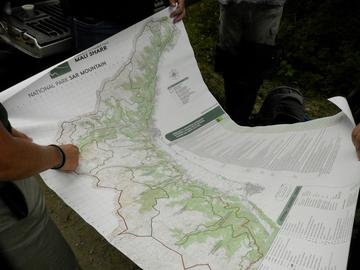
North Macedonia’s protected areas are of great ecological importance, but are increasingly exposed to the risk – among others – of fire. While political fragmentation and a shortage of personnel and resources pose considerable challenges, there has been significant progress. A report from the Šar Mountains National Park
Large carnivores are returning to populate more and more natural areas of the Old Continent: a success for the conservation of ecosystems, but also a cause of conflicts with the population. Coexistence is built by harmonising laws, good practices, and scientific knowledge. The Interreg LECA project moves in this direction