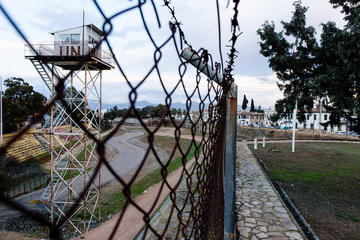
The lack of territorial integrity of Cyprus – an EU member state since 2004 – has never been a vital issue for the Union, but this could change in the case of the three new candidate countries. An interview with Denis Cenușa, associate expert at the Geopolitics and Security Studies Center
In addition to the destruction and deaths on the front lines, Russia's war in Ukraine creates invisible victims, many of whom are women. Women's solidarity networks are trying to help victims of kidnapping, exploitation and human trafficking
Previously marginal revanchist intellectuals have been producing grandiose ideological theorisations, that are now at the core of state-sanctioned narratives legitimising Russia’s invasion of Ukraine. There is however little evidence that the “hawks” can effectively constrain the Kremlin’s policy choices
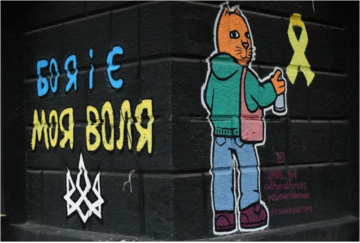
While President Putin’s conditions for achieving peace with Ukraine stay unshakable amid further peace talks, civilians in occupied territories are fighting against Russification. Although rarely talked about in Western media, Ukrainians are engaging in various forms of resistance, both peaceful and violent.
Justice, the role of the EU, life under Russian occupation, and the centrality of people in Ukraine's reconstruction plans: we spoke with Oleksandra Matviichuk, human rights lawyer and director of the Center for Civil Liberties, an organization awarded the 2022 Nobel Peace Prize
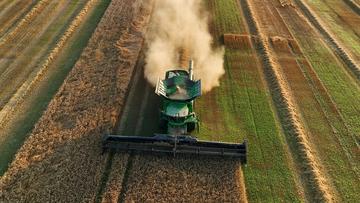
After EU protests prompt a return to pre-war agricultural quotas on Ukrainian exports, agreement in principle is reached for a modernised multiannual trade, while Ukraine shifts toward higher value-added processing to boost competitiveness and mitigate quota impacts
Zla Mavka is a grassroots network of Ukrainian women operating under occupation. Named after mythical Ukrainian forest spirits known for their wild and mysterious nature, the Mavkas represent a nonviolent resistance movement
Ukrainian refugees in Italy face mounting challenges as early solidarity fades. Language hurdles, job insecurity, and rising social tensions reveal the gap between initial support and long-term integration
The forced deportation of Ukrainian children remains a critical obstacle to peace talks, as Russia resists returning them. Despite progress in prisoner exchanges, Kyiv insists that no lasting agreement is possible without the children’s safe return
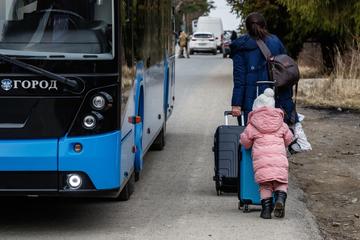
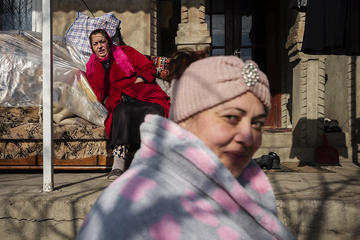
Living a life as a refugee, far from home, but constantly thinking about their country. There are those who think of returning, those who have already returned and have had to adapt to a country at war, those who perhaps will never return and will remain divided between two worlds
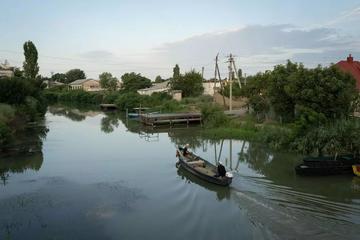
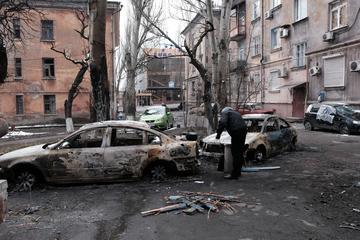
The Russian invasion of Ukraine has also seriously endangered the natural heritage of the attacked country: among the areas most at risk is the Danube Delta on the border with Romania, today subjected to unprecedented ecological pressure. A report
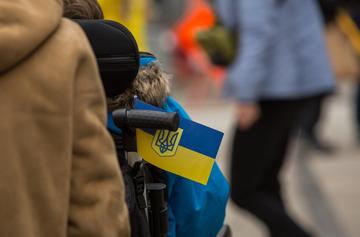
Ukraine is home to around 2.7 million people with disabilities, but the real figure in the war-torn country is certainly higher today. The conflict has made it harder to meet their needs, especially in rural areas
The green transition is one of the greatest challenges of our time. Ukraine, however, not only has to decarbonize, but must do so amidst a war. Despite it, the country is already rebuilding and discussions about greening the economy are vivid
Russia’s full-scale war against Ukraine led to a surge in forest and rural fires across the country. Combating them is all the more difficult amidst the war that binds all resources and unexploded mines that contaminate the territory
It is a violation of human rights, it is unnecessary, it forces unbearable decisions on families, and creates new vulnerabilities. As it renews its martial and mobilization laws in August, Ukraine should reconsider its male travel ban
Serbia and Ukraine used to have close geopolitical positions, but such friendship has been jeopardised by the Russian invasion of Ukraine. A study tries to take stock of the bilateral relations between Kyiv and Belgrade. We interviewed author Kateryna Shymkevych
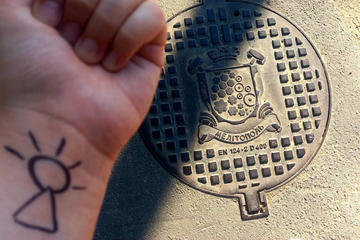
About 500 streets in Kyiv have been renamed since 2014 – many of them changed their name after the military aggression by Russia in 2022. Ukrainian and Western history and figures have now taken the place of Soviet or Russian ones
We were in Kryvyj Rih, an industrial city in central Ukraine, to investigate what the workers' organisations are doing and how they have reacted to the conflict
From the beginning of the Russian invasion on 24 February 2022, a traditional song called "In the Meadow, a red Guelder Rose" (Oi u luzi chervona kalyna) has become the symbol of the Ukrainian resistance
"Our job is not to 'correct' people or to tell them what to think, rather we should be able to offer a credible idea of a future together". Mykhailo Glubokyi is one of the organisers of the Izolyatsia cultural space, founded in Donetsk and then moved to Kyiv. We interviewed him
What were the proximate dynamics that made possible what took place in the Donbas between 2014 and 2022? And what has even happened? An important part of the answer is convincingly outlined in Anna Arutunyan’s excellent latest book
About 100,000 refugees fleeing from Ukraine to Europe are estimated to be Roma. They are particularly vulnerable, and yet appear to suffer from discrimination in at least some European countries, such as Czechia and Moldova
Whether they’re evacuating civilians, transporting troops or exporting goods, Ukrainian railways are on the frontline of resistance against the Russian invasion
The city of Mariupol, sieged by Russian troops for more than two months, was the core of the Greek Ukrainian community for centuries. The future of this community is now more uncertain than ever
Putin's invasion is also the result of the fragile balance that has been created in Europe after 1989. According to Paul D'Anieri, author of "Ukraine and Russia: From Civilized Divorce to Uncivil War", it was a "highway to war". Our interview
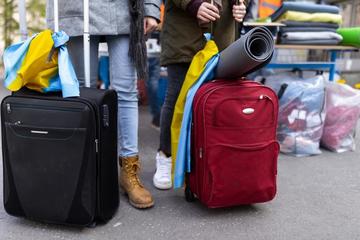
Since the beginning of the war, many Ukrainians – but also Russians – have been seeking refuge in the countries of the European Union. Where are they going, and which are the countries that already hosted the largest Ukrainian communities?
Ukrainian refugees now enter the EU under the aegis of the ultra-fast special protection system, but regular reception centres across the Union are piling up hundreds of thousands of applications and rejecting many. EU members states' asylum systems average more than 15 months of delay
A NATO member with strong strategic and economic ties with Moscow (but also with Kyiv), Turkey is facing the Russian aggression against Ukraine with extreme caution, in an attempt to minimise the risks, but also to take advantage of possible opportunities