Miša Bačulov is a Thai boxing champion, philanthropist, activist and, since 2024, a councilor in the Novi Sad City Assembly. Today, he is one of the most prominent figures of the opposition against Vučić. We met with Bačulov shortly before his arrest
On the occasion of the twenty-fifth anniversary of the death of Professor Edward Dennis “Ned” Goy (1926–2000), a look at the life and cultural activity of this great Slavic scholar and translator of important works by Serbian and Croatian authors
In this double interview between Serbia and Croatia, we talk to two experts about the state of the wolf population, until recently a strictly protected species in the EU, now degraded and potentially huntable. However, in Serbia, where wolves have always been hunted, the situation does not seem to be getting worse
As the political situation in Serbia remains explosive, the publication of a controversial private conversation highlights an attempt to muzzle the few media outlets in the country that continue to take a critical line towards the government
Surveys on support for the accession of new member states highlight the need to rethink the way the benefits of enlargement policy are discussed, both inside and outside the EU, so as not to miss yet another opportunity. An interview with Bojana Zorić, analyst at the EU Institute for Security Studies
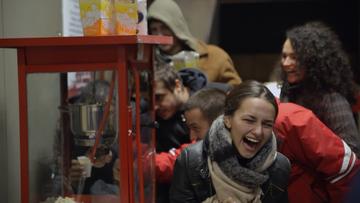
In Belgrade's heart, Novi Bioskop Zvezda symbolizes resistance against privatisation. The "Movement for the Occupation of Cinemas" saved it in 2014 from real estate speculation by occupying it. This made Zvezda a beacon for independent cinema and an inspiration for activism
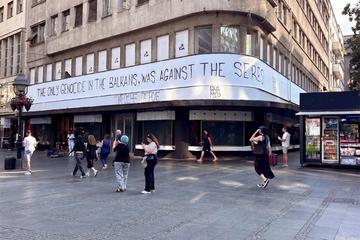
The general mood in Serbia is far from commemorative. For the Serbian authorities, summarizes the author, all sides committed crimes during the war, so all sides are guilty, and no one is guilty. A position close to that of former president Slobodan Milosevic after the war
Despite the aspirations of the Open Balkan initiative to foster regional cooperation and economic integration, women continue to encounter barriers in accessing meaningful employment opportunities
In Serbia, the Commission for Electronic Media (REM) plays a key role in regulating the sector and freedom of expression, but is tightly controlled by the government. Students are protesting to demand for its members to be super partes and elected transparently
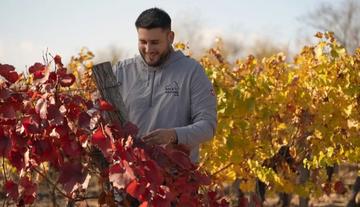
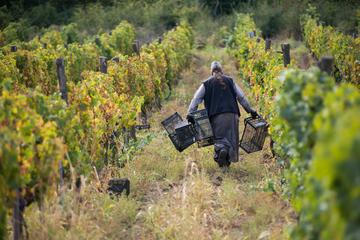
Down the bunches slide, gravity doing its work, onto a conveyor belt where they would be sorted by hand. The soft landing maintains the integrity of each grape, ensuring their insides aren’t exposed to the elements. It is a therapeutic process for the winemaker and the onlooker, a patient but necessary first step
A series of reports by Amnesty International exposes Serbia’s "Digital Prison", a widespread surveillance campaign targeting journalists and civil society. In this interview Jelena Sesar, researcher at AI, takes us inside this prison
After decades of unfulfilled promises and months of protests against President Vučić, many in Serbia no longer see the EU as a sincere interlocutor truly interested in the democratic future and human rights in the country. A bitter comment from our correspondent
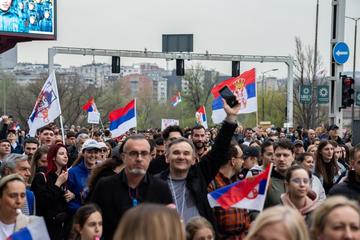
The oceanic demonstration on Saturday, March 15 in Belgrade was repeatedly obstructed, with buses and trains cancelled and groups of fake students "wanting to return to class" supported by veterans of the infamous Red Berets
Serbian President Aleksandar Vučić has been calling for a generic "fight against corruption" for twelve years. Until a few weeks ago, this was just empty rhetoric. Now, to calm the protests, some arrests have been made, but they remain unconvincing and the protests are not subsiding
Protests in Serbia continue. On March 1st, a new protest was held in Niš. With a bit of irony, students issued the “Students’ edict”. Vučić reacted harshly, attacking the students and the media outlets that cover the demonstrations
The last episode of our reportage along the Drina: from Višegrad towards Žepa and Mokra Gora, all the way to the Šargan Eight, a railway built in 1916 by the Habsburg administration. We talk about the past, language variations and environmental protests
Two different countries and two different realities were seen on the streets of Serbia last weekend. On one side, tens of thousands of students and citizens marching from city to city calling for the rule of law; on the other, the faithful of President Vučić, transported by bus and train at the expense of taxpayers
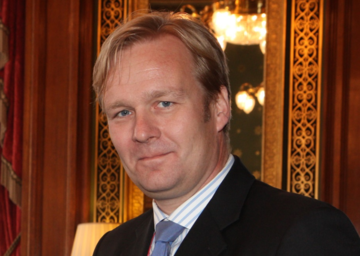
Danish diplomat Peter Sorensen is the new EU Special Representative for the Kosovo-Serbia dialogue. The appointment was welcomed in Pristina, but the outlook for the future of the negotiations remains murky
The protest, initiated by students, has been spreading like wildfire throughout Serbia thanks to the energy and intelligence of young people, triggering changes. Fear has changed sides and this is the greatest achievement of the student movement so far. A comment
An analysis of the ongoing protests in Serbia, the skill of students in organizing the demonstrations, the differences with the protests of the 1990s and 2000s, and the possible risks of the absence of a long-term plan and strategy
The absence of EU flags at anti-government demonstrations shows that accession has become a divisive issue in the candidate country. Interview with Srđan Majstorović, president of the board of the European Policy Centre (CEP)
In Serbia, the mobilisation and popular protests against corruption and for justice for the victims of the collapse of the roof of the station in Novi Sad continue. A detailed account of the last few days
Balkan Orthodox monasteries like Bukovo and Tvrdoš preserve centuries-old winemaking traditions, producing high-quality wines while supporting local communities and maintaining their cultural heritage
In Serbia, the investigative newspaper KRIK is the target of frequent legal harassment. To counteract it, the editorial team has developed strategies based on civil society solidarity, public denunciation and monitoring of trials
More than a year ago, the Israeli invasion of Gaza began. In the countries of the former Yugoslavia, governments and civil society have reacted differently. If governments – with the exception of Slovenia – have all but sided with Israel, civil society organisations have organised protests and demonstrations in favour of Palestine
Amid a systematic erosion of editorial independence by the government, stronger international support is needed to uphold media freedom in the country. An interview with Igor Božić, news director of the independent N1 TV
On November 1st, the roof of the Novi Sad station - recently rebuilt by Chinese companies - collapsed, causing 14 deaths and dozens of injuries. Thousands of citizens took to the streets, giving rise to protests that also turned violent
Chapter 22 on cohesion policy is one of the most complex negotiating chapters Serbia has to deal with for EU accession. In this interview, Dragana Djurica provides crucial insights into the critical role of civil society, the importance of regional development, and the challenges and opportunities that lie ahead
To contribute to the European Commission’s Rule of Law monitoring, OBCT, in partnership with SCiDEV and IJAS, produced two Shadow Reports outlining the challenges and gaps in media freedom in Albania and Serbia. The main findings were presented during a webinar
Conceived as an alternative to EU cooperation, the Open Balkan initiative, promoted by Serbia, Albania and North Macedonia, aimed to create a regional common market to allow the free movement of goods, services, capital and people. The reasons for its failure