To mark the International Day to End Impunity for Crimes against Journalists on November 2, the Media Freedom Rapid Response (MFRR) honours the memory of those who have lost their lives in the pursuit of truth and demands justice for the crimes committed against them
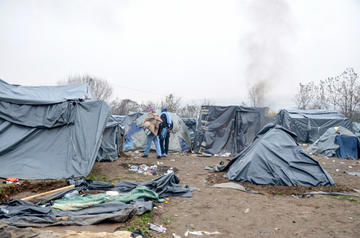
From an illegal migrant to a legitimate business owner: the story of Vahe, an ethnic Armenian, reflects the real struggles of thousands of migrants after ten years of working under the table in Europe, dealing with papers, and living under constant fear
Against the backdrop of a rapidly worsening media freedom crisis across the region, most prominently in Serbia, a coalition of international media freedom, journalists’ and freedom of expression organizations calls on European Commission President Ursula von der Leyen to raise the threats to the protection of journalists and media pluralism with the respective authorities during her visit to the Western Balkans this week (13-16 October)
A decade after the so-called “refugee crisis” of 2015, South-Eastern Europe remains the focal point and most fragile terrain of European migration policy. What appeared to be a temporary emergency has become a permanent political laboratory in which civil society, deterrence strategies and geopolitical realities are intertwined
OBCT joins today's strike, to support the humanitarian and nonviolent mission of the Global Sumud Flotilla and denounce the genocide we are witnessing in Gaza
In a new study recently published, OBCT and CeSPI explore the untapped contribution of communities of practice to the EU integration of the Western Balkans
In this double interview between Serbia and Croatia, we talk to two experts about the state of the wolf population, until recently a strictly protected species in the EU, now degraded and potentially huntable. However, in Serbia, where wolves have always been hunted, the situation does not seem to be getting worse
By materially supporting European regions on different sides of the border to solve a common problem, Interreg projects demonstrate how the impact of transition is often fostered by cross-border cooperation
Constance, Gdańsk, Klaipėda, Ejsberg. These are some of the European coastal cities that are undergoing major expansion of their port facilities, in the face of serious environmental damage
To protect the marine ecosystems of the Adriatic, concrete policies are needed, shared by all the countries bordering this sea. Often, these results are achieved thanks to bottom-up transnational cooperation initiatives. An interview